
Buying your first house plants can feel a bit daunting. What plants to choose? Where’s best to keep them? And the big one, how do i keep these things alive? But with a little bit of knowledge and love, you can bring life and colour into your home, and with it, a whole wealth of benefits for your health and wellbeing.
Finding your soulplant
There are three key things to consider when choosing a house plant:
- Purpose
- Environment
- Budget
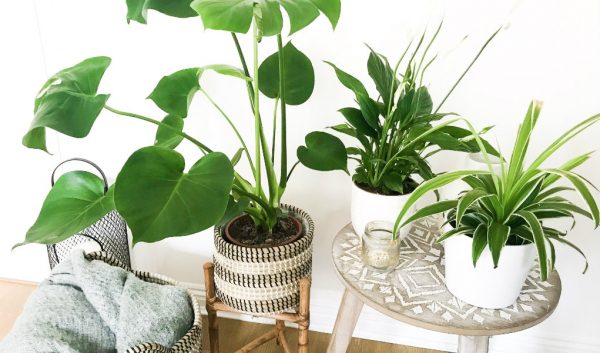
Think about what you want from your house plants. Do you want plants which purify the air or plants which simply brighten up your space and bring nature indoors? Do you want small plants for table tops, large plants to stand on the floor or plants with flowers?
Then look at your environment, is there much natural light in your home, or do you need to choose a plant which likes shade? How often are you going to be able to care for your plant, can you regularly water, clean the leaves and occasional repot, or is a once-weekly water more realistic for your lifestyle? If you have pets or young children, you will also need to decide whether you wish to avoid toxic plants, or if you can place them in a spot they definitely can’t be reached by little paws and hands.
Finally, there are a whole range of plants out there to suit different budgets. Before you set your heart on the perfect plant, compare a few prices from local garden centres or other sellers as they can vary massively! Always check the plant is looking healthy, with vibrant leaves and a sturdy stem. Look out for any damage, drooping leaves or signs of bugs and avoid this plants. Going for a seasonal flowering plant? Pick one with unopened buds so you get to see their whole flowering cycle.
So what are the health benefits of house plants?
Air purification
NASA completed a study to research how different house plants filter different toxins from the air. You can read the full study and the results here if you are interested. The experiment tested a range of plants (and their soils) ability to remove Trichloroethylene, Benzene and Formaldehyde from the air in a controlled environment. We are exposed to these chemicals through the air in our homes and they have short and long term health effects including headaches, nerve damage, damage to blood cells, respiratory problems, running nose and even some cancers.
The results show that the top plants for removing Trichloroethylene from our air are Gerbra Daisy, Peace Lily and Marginata plants. The best for removing Benzene are Gerbra Daisy, Pot Mum and Peace Lily, and the best for removing Formaldehyde are Bamboo Palm, Janet Craig and Mother-in-laws Tongue. From these results, I chose to add a Peace Lily to our collection, to help detoxify the air in our bedroom where we spend the majority of our time spent in the house. This plant is happiest in shady areas, and required moderate care and watering when its soil is dry.
Humidity
Plants release moisture into the air through the processes of photosynthesise and respiration. Approximately 97% of the water they absorb will be released, increasing the humidity around them. This humidity helps us to breathe and can also help with colds, coughs and dry skin.
Recovery
Indoor plants in the home can actually speed up our recovery when we are unwell. A study conducted by Kansas State University concluded that patients who had plants in their hospital rooms recovered quicker than patients who did not have any plants in their room. The results showed:
Patients in the plant rooms had significantly more positive health outcomes than those in the control group with no plants. Patients exposed to plants experienced shorter hospitalizations, fewer intakes of postoperative analgesics, more positive physiological responses, and less pain, anxiety, and fatigue than patients in the control group.
Seong-Hyun Park
You can read the full study here.
Mental health
There are many studies out there which discovered that having plants in offices or learning spaces increase focus, productivity and mental stimulation, whilst reducing anxiety and stress. Experiments have found exposure to plants may actually slow the heart rate, relax muscles and reduce blood pressure.
Whilst the experiments and studies mentioned are great indicators for the possibility of incredible physical and mental health benefits, the results will vary depending on many factors such as environment and quantity and type of plants.
For more posts about mental health, check out the Mind section of our blog.
But it is safe to say, plants are amazing! Bring the nature indoors, brighten up your space and maybe experience some serious health benefits as a result. Tell us what your favourite plants are to have in the home and share your tips at @sistablisstribe on Instragram, or by tagging #sistablisstribe.






I’m extremely inspired with your writing skills as neatly as with the layout to your weblog. Is that this a paid subject or did you modify it your self? Either way keep up the excellent high quality writing, it’s rare to look a nice blog like this one nowadays..